
A CRM built around your business.
Your customers, your follow-ups and your stages in one place. In your words, wired to the one tool you already live in. Built for a 3-to-15-person business, installed in one session, priced flat instead of per seat, and yours to keep.
No card, no pitch. If a built-for-you system wouldn't help you, I'll say so.
Builds are $1,997 once. The fifteen minutes is free.
If it doesn't end up working for you, you don't pay for it.
Why the last CRM didn't stick
A lot of independent businesses that pay for a CRM use three things in it and ignore the rest. The ones who stopped using it say the same five things.
“It's too complicated.”
Six things, in your words. If your stages are Quoted, Scheduled, Done and Invoiced, that's what the buttons say.
“The price jumped when we needed one more thing.”
One flat price per business. There's no tier to upgrade to, because there isn't a ladder.
“Half of us went back to the spreadsheet.”
Built to beat the spreadsheet at the thing you do fifty times a day: log the call, set the next step. One tap.
“We type everything in twice.”
Wired to the one tool you already live in: your invoicing, your scheduler, your management system. A customer goes in once.
“Nobody answered when it broke.”
You have my number. On the $99 plan I answer within a business day, and I'm the person who built it.
You don't need HubSpot. You need the six things you'd actually use.
Your customers
People and companies, phone, what you sold them, what's open.
Your pipeline, in your stages
A board, a calendar or a list, whichever matches how the work moves.
Today's follow-ups
Who to call, chase or thank today, decided for you every morning.
The history
Every call, note, letter and text on one timeline, so whoever picks up the phone knows.
The numbers you actually look at
Quotes sitting, renewals this month, jobs done but not invoiced. Not forty dashboards.
The one connection
Your invoicing, your scheduler, your management system. Entered once.
Same six things. Three completely different tools.
A plumber's day and an insurance agency's month don't look alike, so their CRMs shouldn't either.
An insurance agency
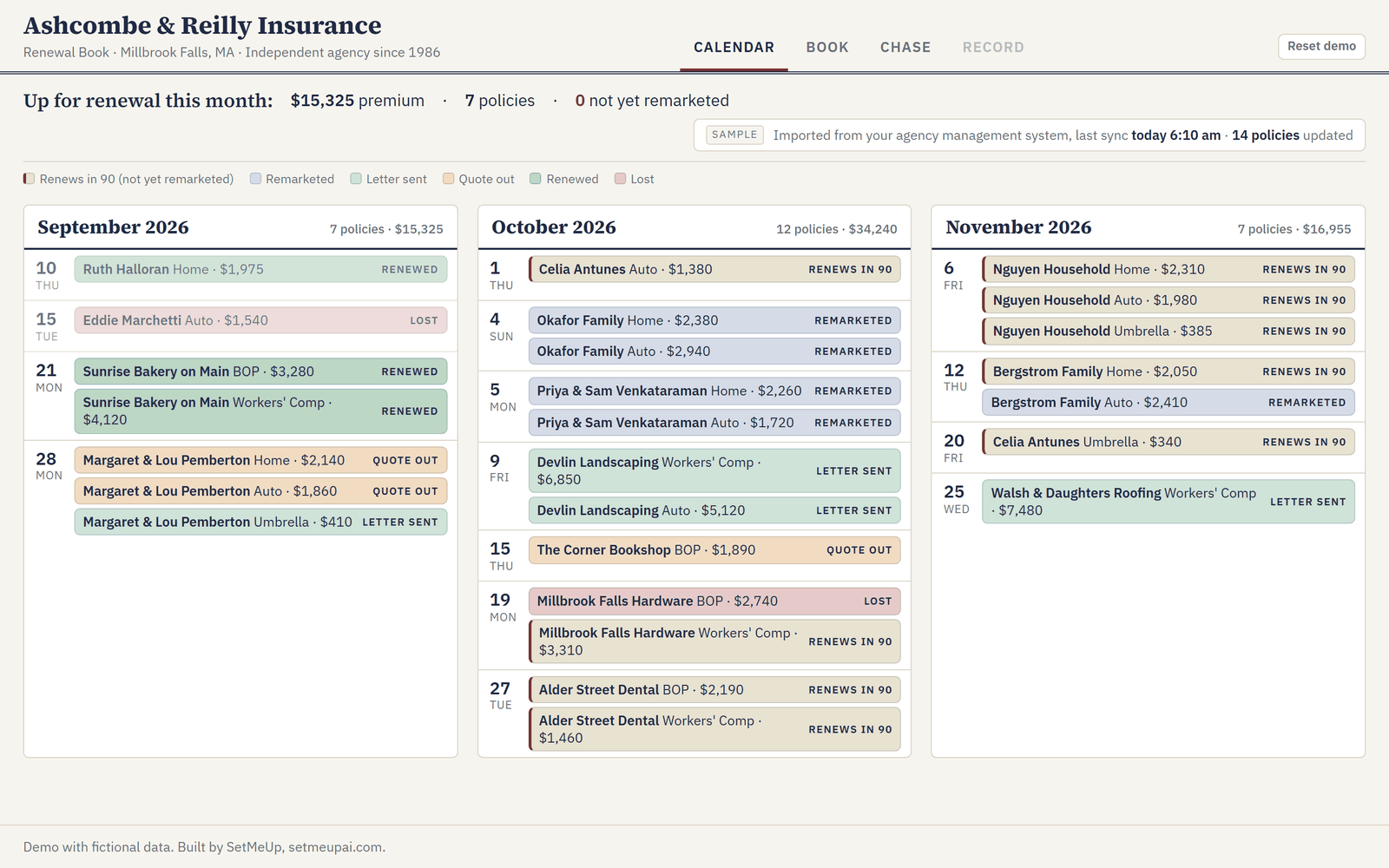
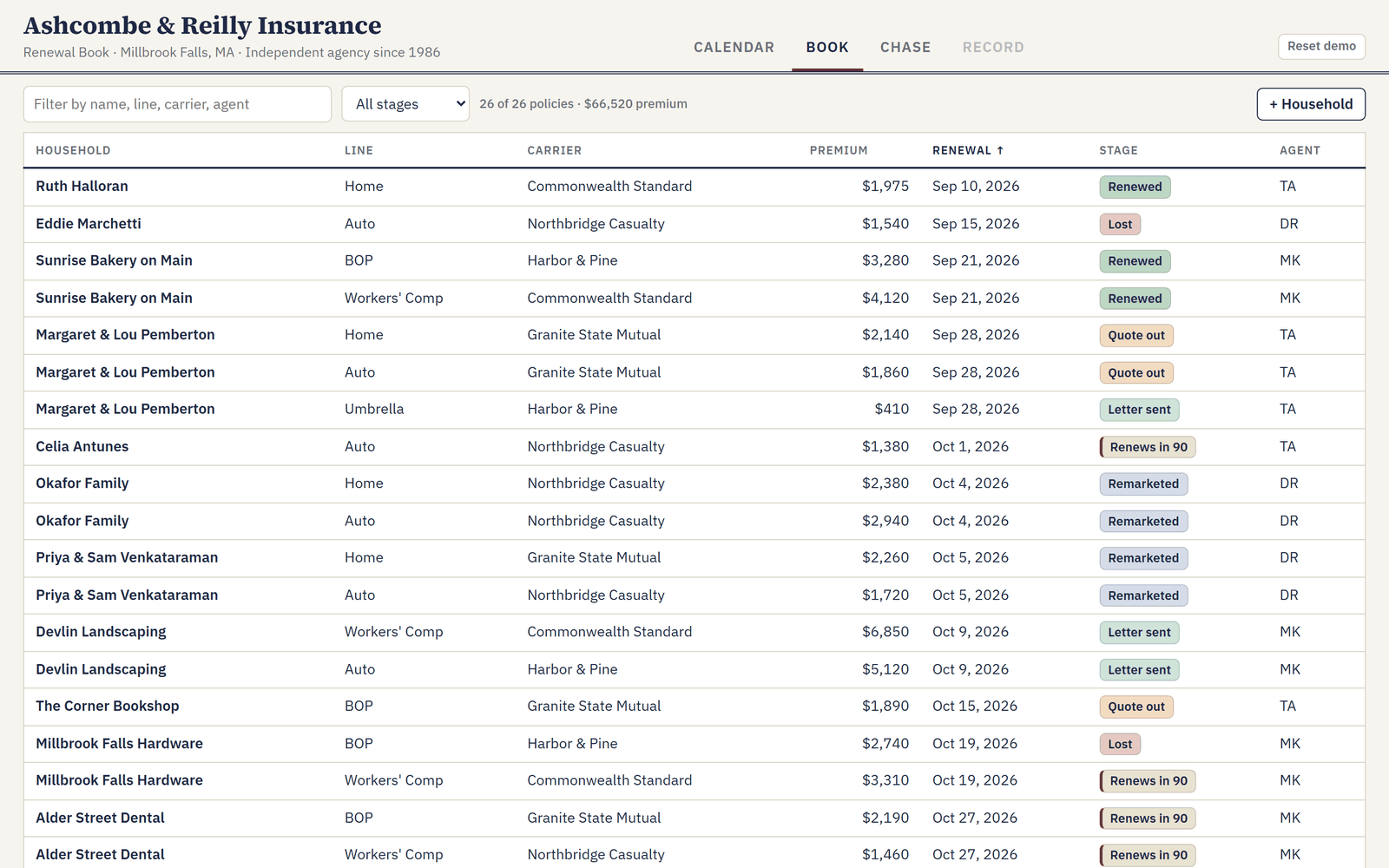
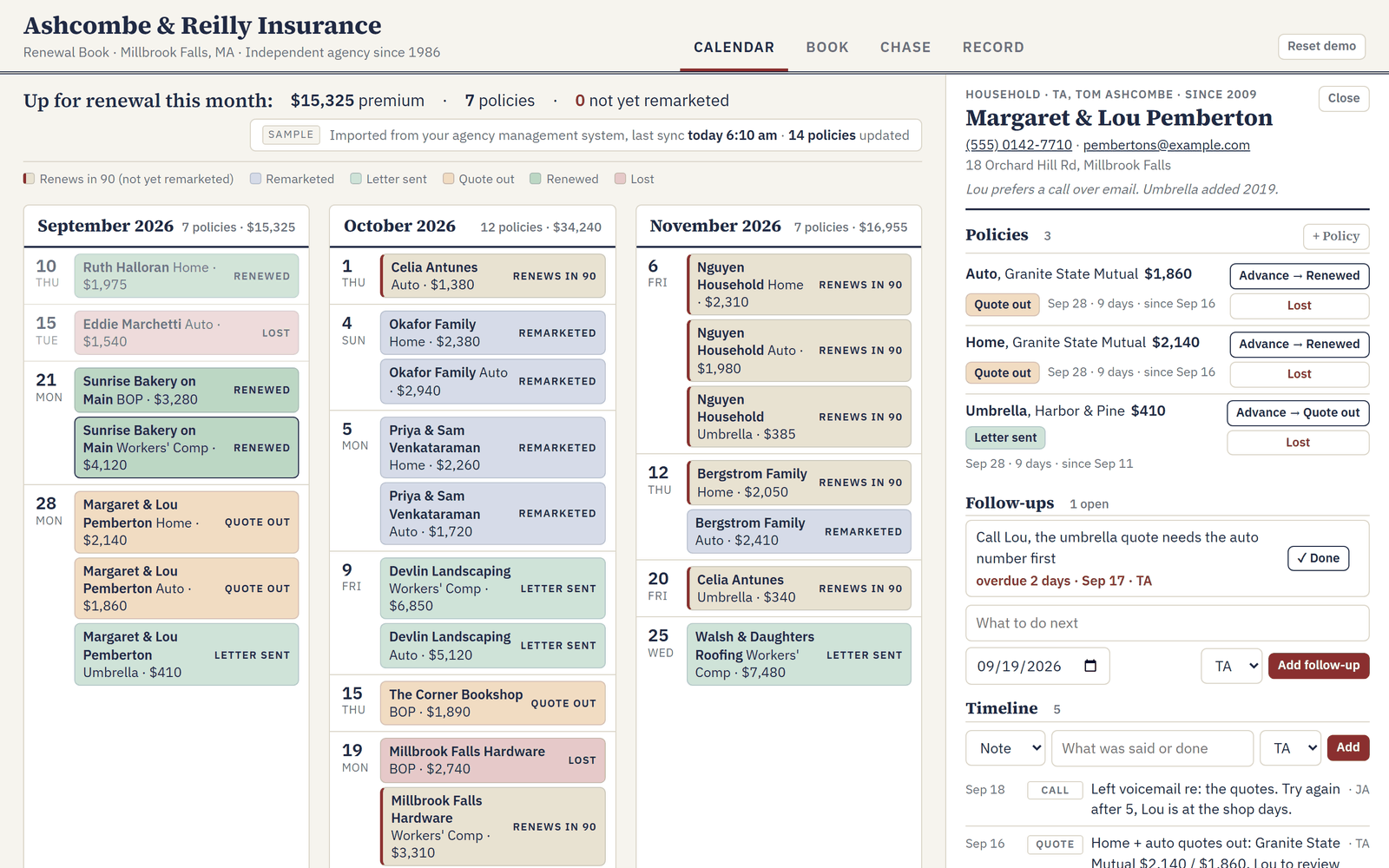
Renewals as a calendar. Ninety days out, who's been remarketed, whose letter went out, what's up for renewal this month in premium.
A plumbing & heating company
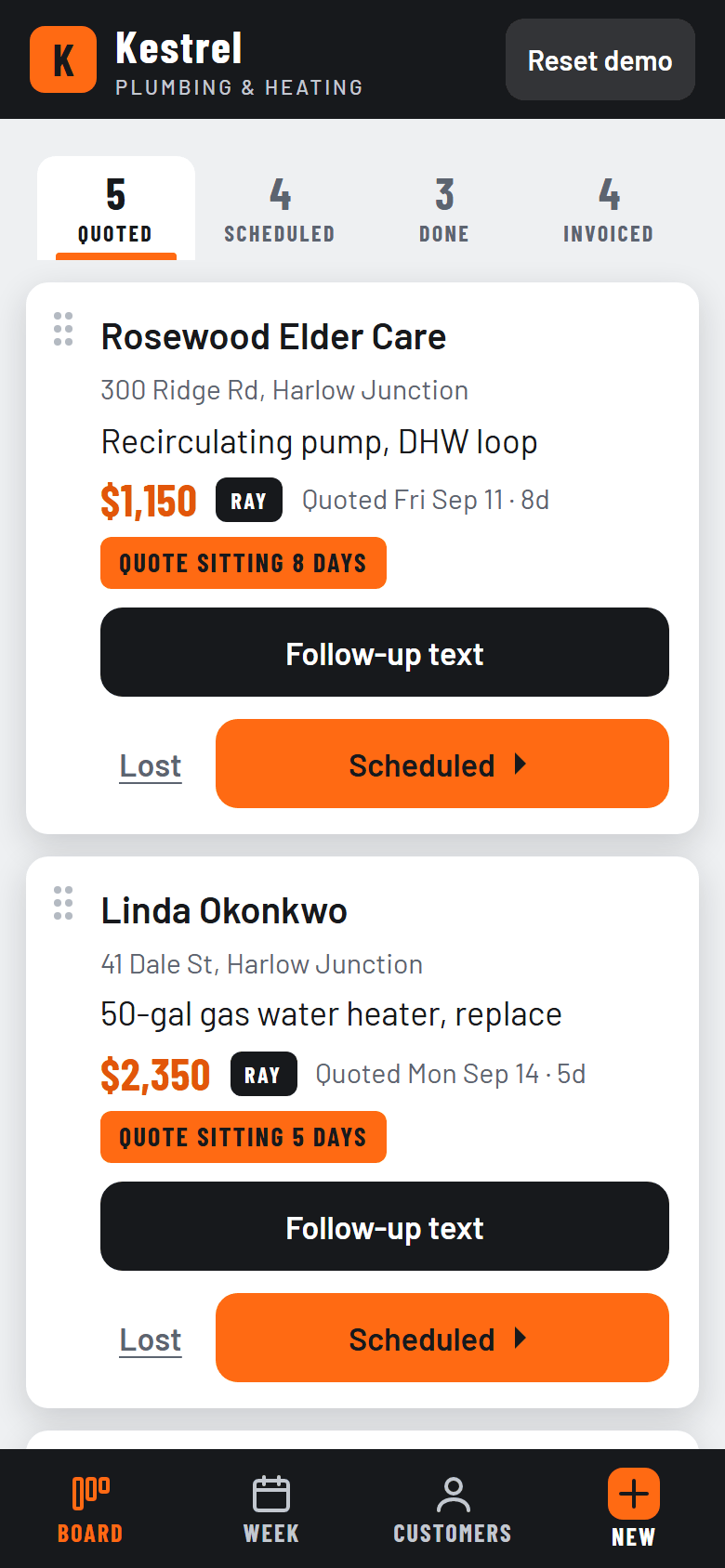
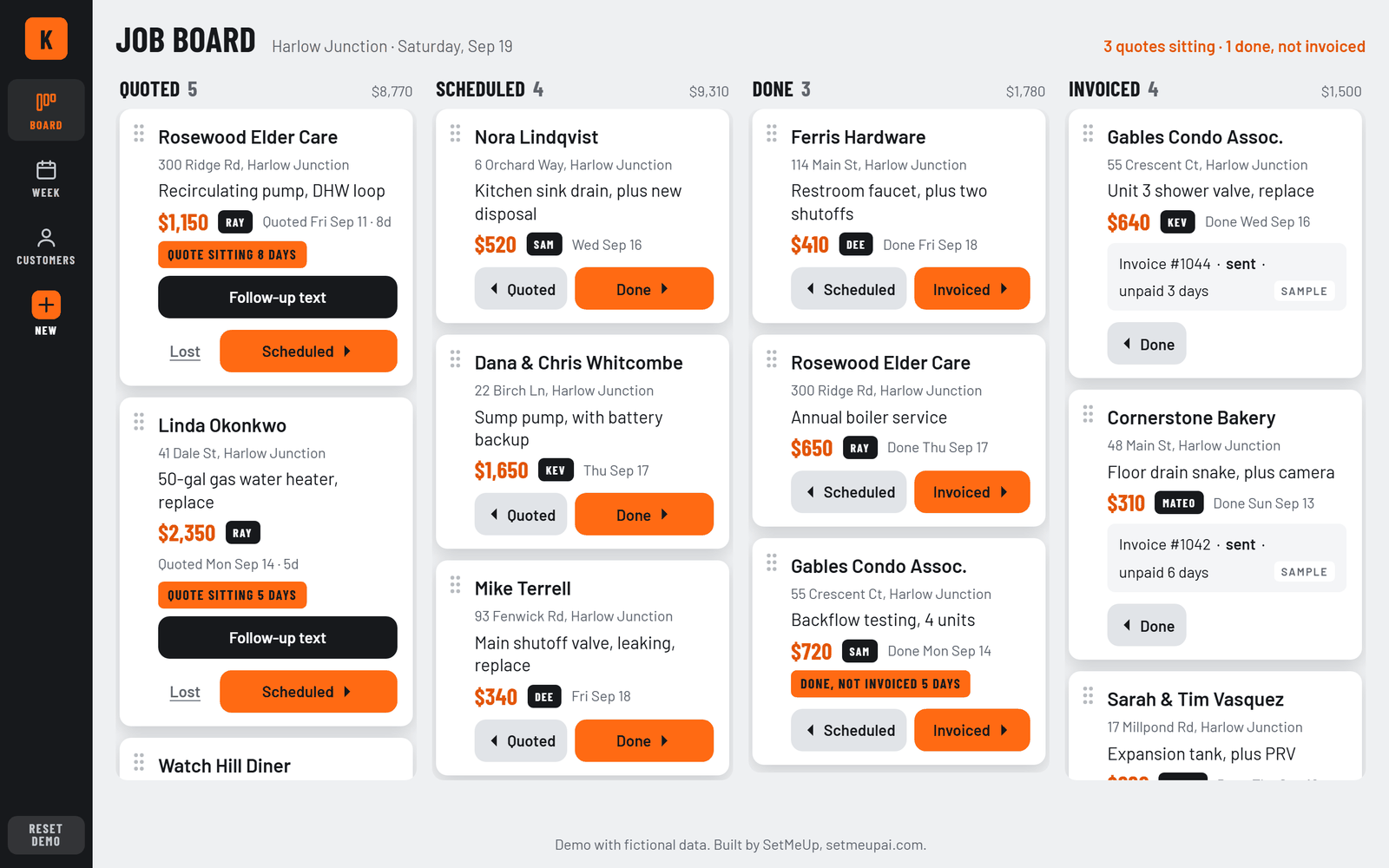
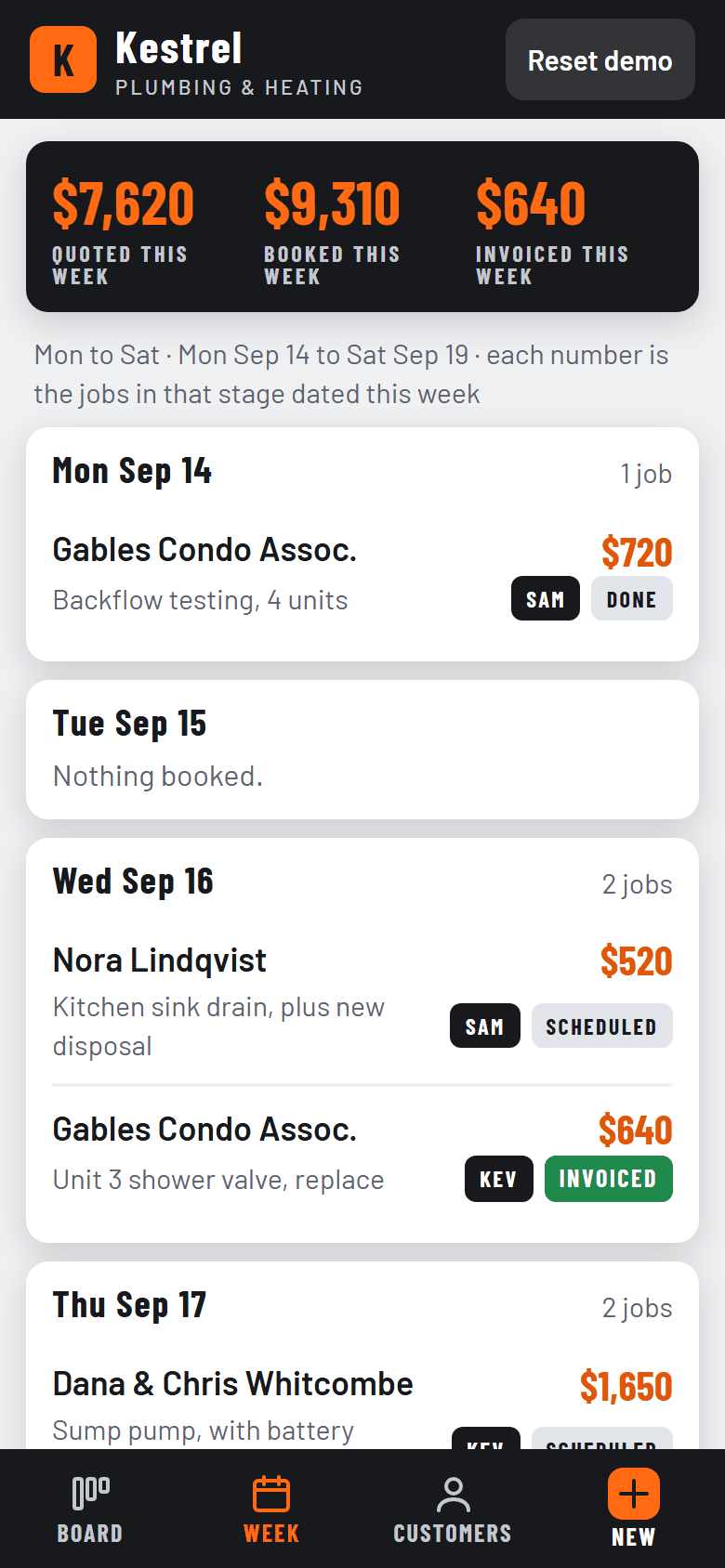
Quoted, Scheduled, Done, Invoiced, on the phone from the truck. A quote sitting three days gets a follow-up text drafted in one tap.
A physical therapy clinic
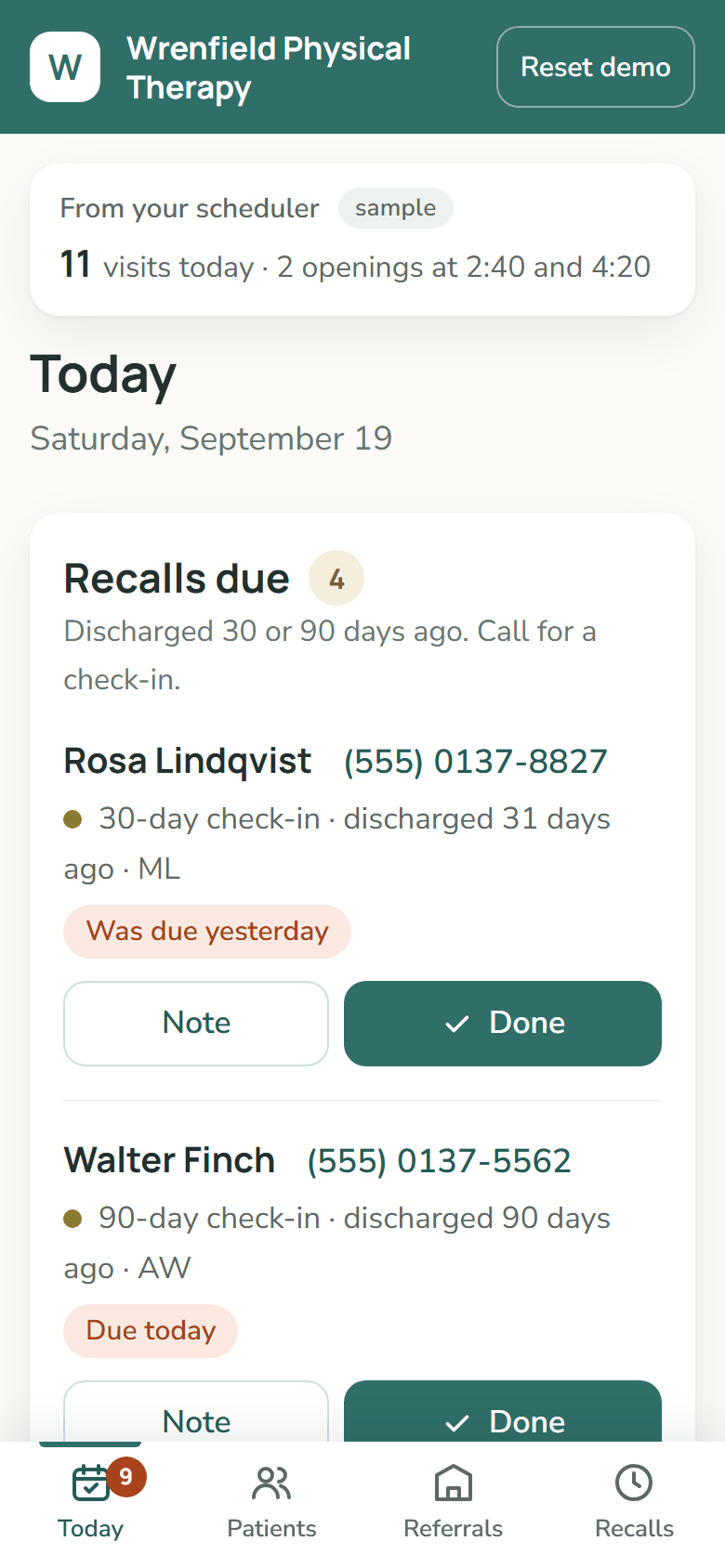
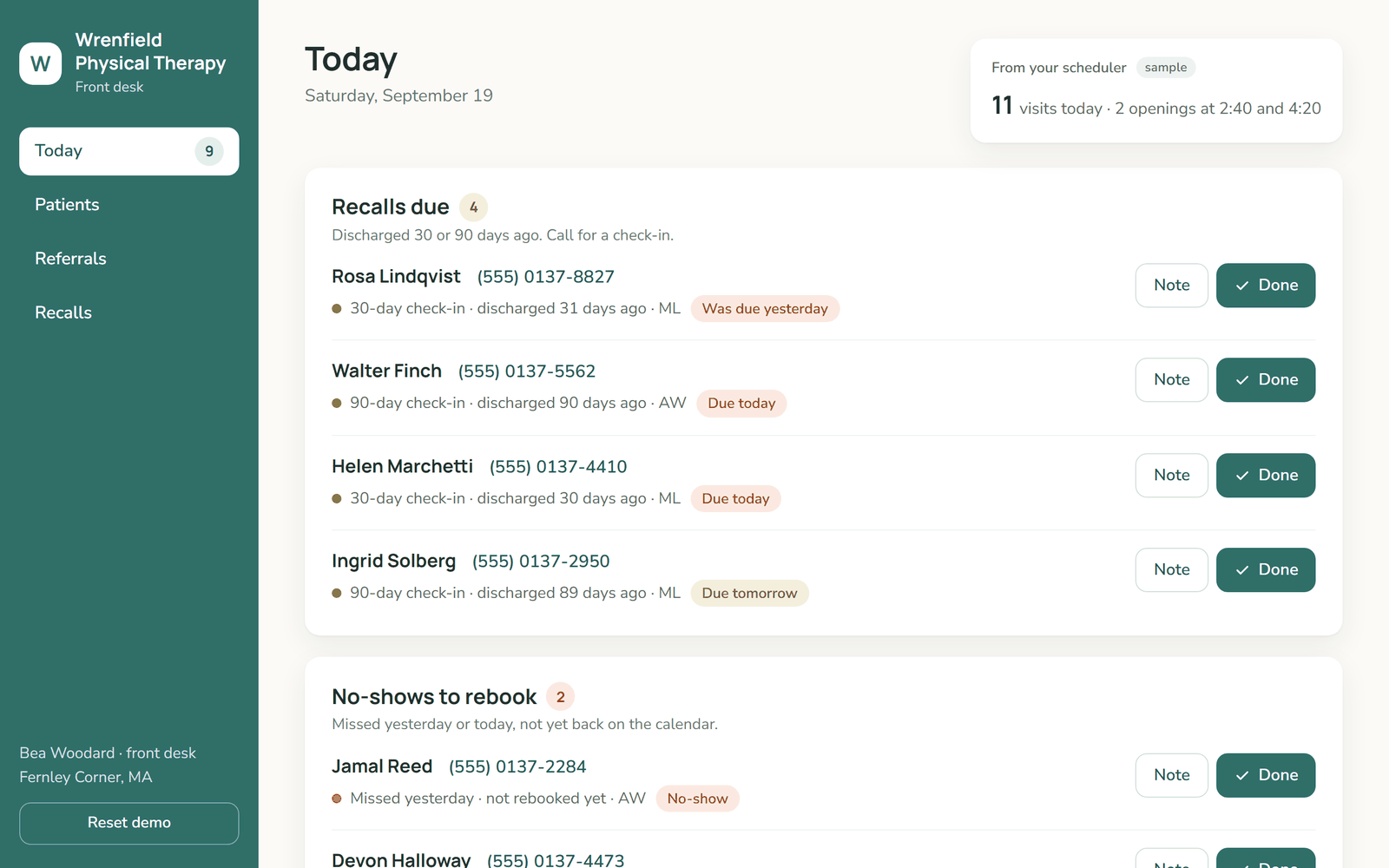
Today: who's due for a check-in, which no-show to rebook, which referring practice to thank. Every patient's history in one place.
Recorded straight off the working demos, fictional data and all. Open any of them and click around. Yours gets designed in the free look.
Three steps. One session.
The free look: 15 minutes.
You show me how you track customers now: a notebook, a spreadsheet, a seat nobody opens. I tell you honestly whether a built-for-you system would help. If it wouldn't, I'll say so.
The build and the install: one session.
I build it around your stages and your words, put your list in it, and install it with you on a call or at your desk. You log a real customer before we hang up.
It's yours.
It lives in an account in your name, exports any time, and keeps working whether or not we ever speak again. If you want it hosted, backed up and looked after, that's the monthly, and it's optional.
One price per business. Not per seat, not forever.
The off-the-shelf CRMs below charge by the seat, every month, for as long as you use them. Here's what a five-person team and a twelve-person team pay a year, from the vendors' own price pages, checked 12 September 2026:
| Per year | Five seats | Twelve seats |
|---|---|---|
| Less Annoying CRM | $900 | $2,160 |
| HubSpot Starter | $420 on the new-customer promo → $1,200 when it ends | $1,008 → $2,880 |
| Zoho Professional | $1,380 | $3,312 |
| Pipedrive Growth | $2,340 | $5,616 |
| Pipedrive Premium | $3,540 | $8,496 |
| SetMeUp hosted, from year two. Year one is $3,185 | $1,188 | $1,188 |
A build from me is $1,997 once. With hosting, backups and help that's $3,185 in the first year and $1,188 a year after, and it doesn't move when you hire.
At twelve seats on a mid-tier plan like Pipedrive Growth it pays for itself in about five months. At five seats on a cheap plan it doesn't, and I'll tell you that in the fifteen minutes.
Prices, plainly.
The build + install
$1,997once
If it doesn't end up working for you, you don't pay for it. You decide, at the end of the install session, before any money changes hands.
- Your stages and your words
- Your list imported
- One connection to the tool you live in
- Installed in one session, on a call or at your desk
Hosted and looked after optional
$99a month
hosted, backed up nightly, export everything any time, me within a business day when something needs changing, and your connection kept working.
Cancel any time. Full export first, and the CRM keeps working if you take over the hosting or move it.
Founding price: the first three businesses pay $1,497 instead of $1,997, in exchange for a two-line testimonial with a number in it after the install. Three of the three are still open (checked 19 September 2026). When they're taken, this line comes down.
Already on a CRM you like? I'll set it up around your stages instead: $497, one session. Same guarantee.
You pay after the install session, not before.
What the monthly doesn't promise: an uptime number. It promises nightly backups, an export button, and a person who answers.One person, on purpose.
Daniel Lombard
Bentley University
Waltham, MA
Daniel Lombard. Eighteen, Bentley University, Waltham. I do every call and every build myself, which is the reason I can build around your shop specifically.
Below are three things I've already built and shipped. None of them is a CRM I sold to a client, and I'll say so plainly: you would be the first.
Three things I've already shipped.
Not mockups and not coursework. Software that other people open and use. Customer names, product codes and private figures are covered over in these shots.
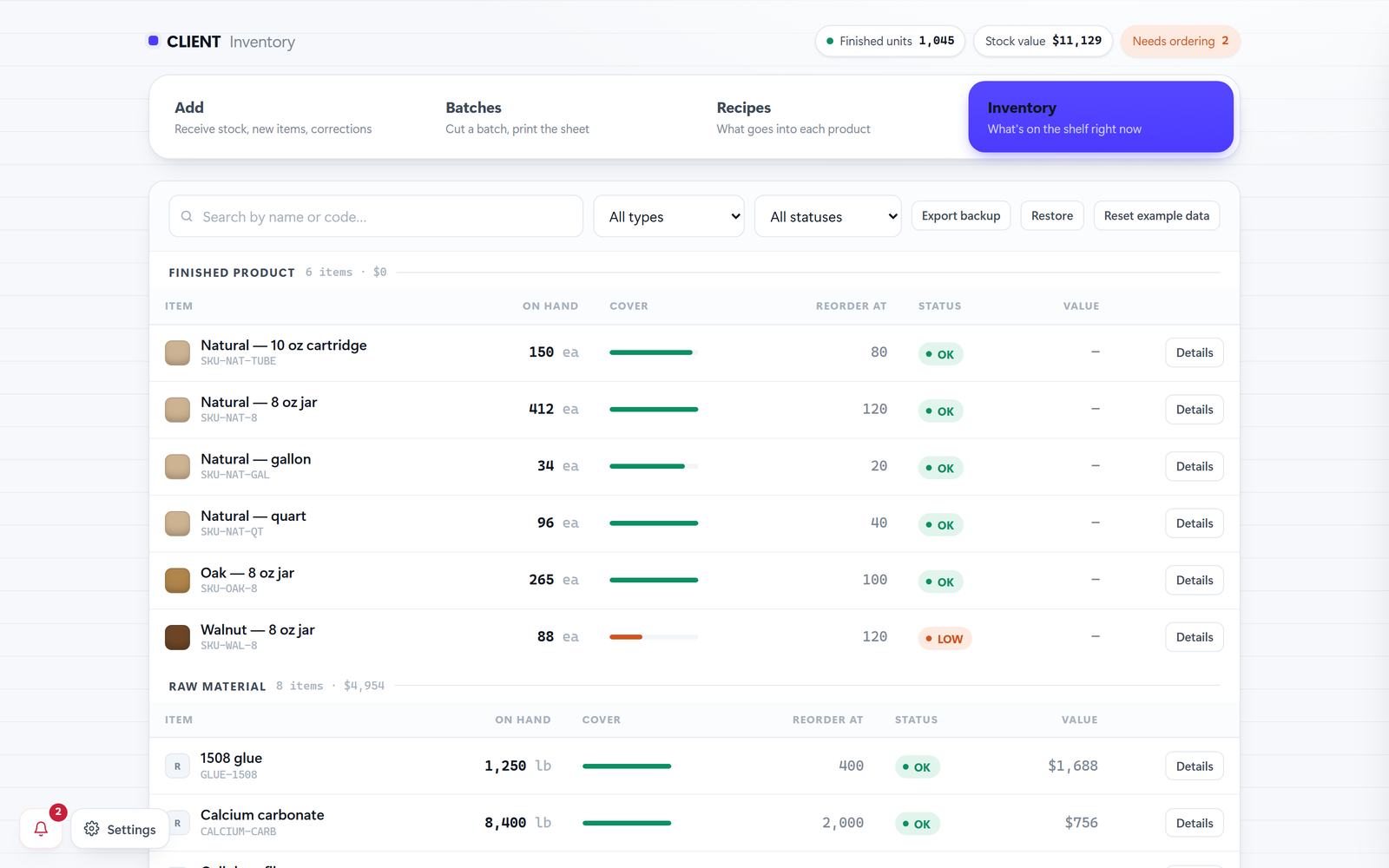
Stock tracking for a manufacturer
A wood-filler manufacturer that asked not to be named. Stock sat on one shelf feeding three sales channels and nothing kept one count. It started as a spreadsheet and ended up an installed Windows program: every jar, lid, label and finished batch logged as it moves, a reorder list, and a warning when something runs low. Production tripled with it in place.
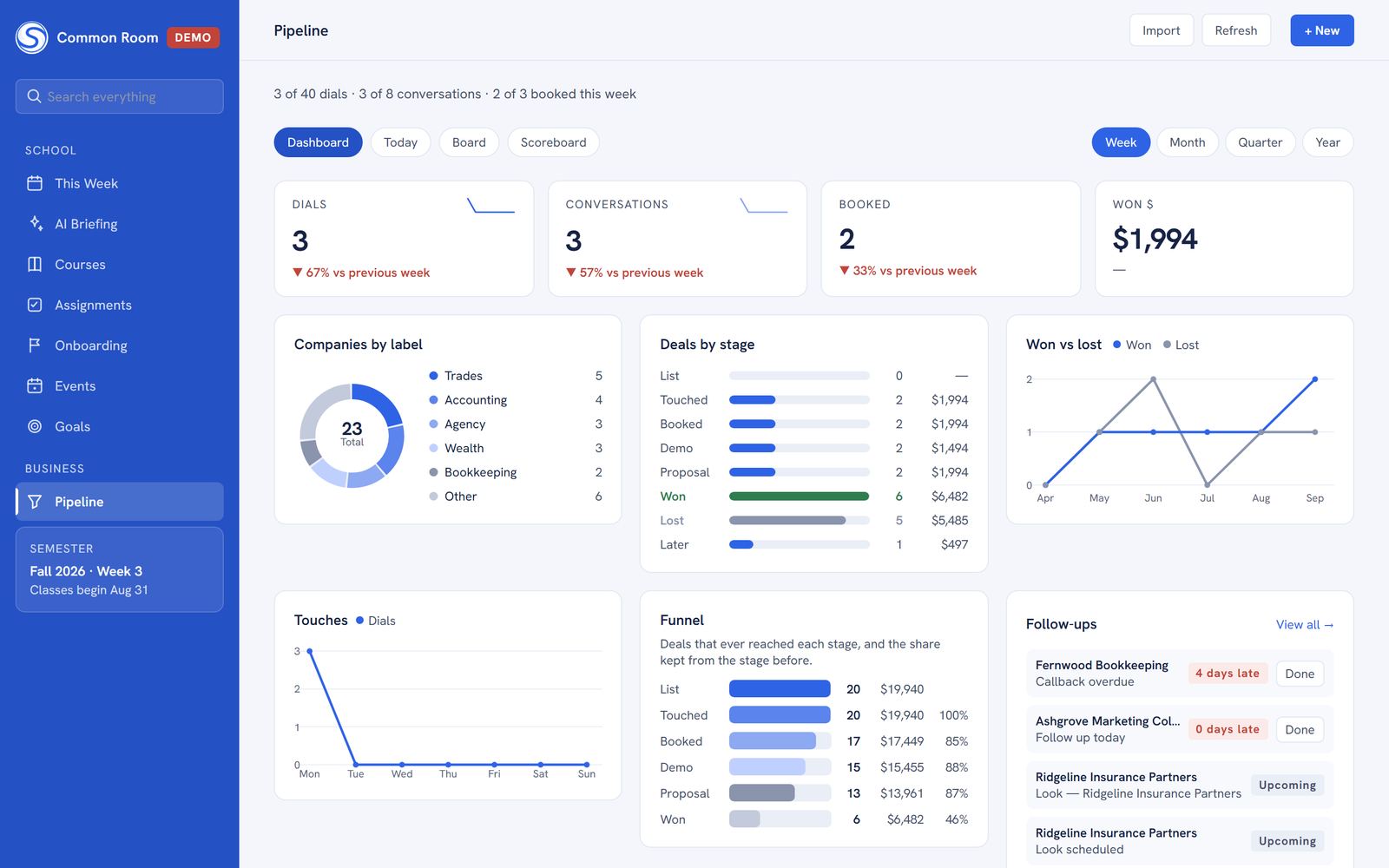
The dashboard I run my own week on
Deadlines, email and a pipeline on one board, with the follow-ups worked out every morning. It's where the CRM I sell came from: I built the tracking layer for myself first, ran my own calling on it, and fixed what annoyed me before anyone paid for it. Shown here on its demo data.
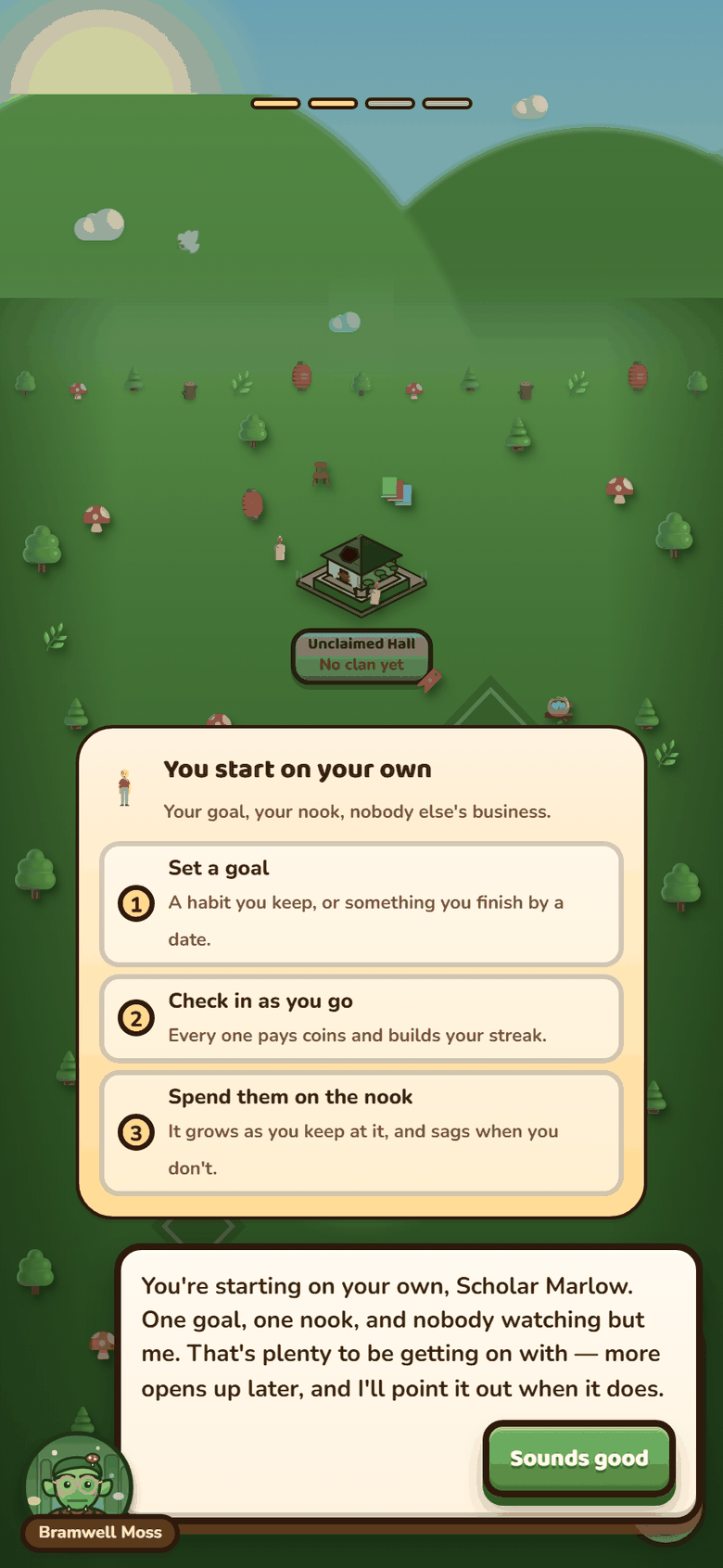
A live app, with a co-founder
Outposts: a goal-keeping app where a village grows when you turn up and sags when you don't. Built with a co-founder, shipped, and live on the web with real accounts behind it. A different job from a CRM, and the reason I know what it takes to keep software running after the install.
I don't have a CRM client to point to yet. That's why the first look is free, the first three builds are the founding price, and the guarantee is the whole promise.
Questions, answered.
We already use HubSpot / Salesforce / a spreadsheet.
Good. How much of it do you use day to day? Plenty of independent shops pay for seats built for a much bigger sales team and touch two or three things. If the spreadsheet works and nothing slips, you don't need me. The 15 minutes is where we find out.
How much, really?
$1,997 for the build and install, once. $99 a month if you want it hosted and looked after, one price however many people use it. $497 if you'd rather I set up the CRM you already have. If the numbers don't work for your business, I'll say so in the look.
What's it built on? Do I own it?
Proven open-source CRM software, configured around your stages, your words and your data, in an account in your name. You can export everything any time. If I disappeared tomorrow, it keeps working.
Is our customer list safe with you?
Nothing about your real customer data touches anything during the free look. If we build, it lives in an account in your name, backed up nightly, exportable any time, and I put that in writing.
What happens when you graduate?
It's built so it doesn't depend on me: your account, your data, an export button, open-source software anyone could take over hosting. And I answer the phone until then.
We already have ServiceTitan / Clio / an agency management system.
Keep it. Those hold your jobs, matters or policies. What they usually don't do is the remembering and the chasing on top. That's the layer I build beside them, connected to them.
We tried a CRM before and nobody used it.
Usually because it was built for a bigger team and everyone went back to the old way in a month. Yours gets built around how you already work. If it's slower than the spreadsheet on the thing you do fifty times a day, I've built it wrong.
Can it do AI things?
It can. Every CRM can now, and it isn't the reason to buy one. The reason is that your stages, your words and your one connection are built in, and the price is flat.
How long does it take?
The install is one session. Between the look and the install I build it, so plan on a week or two.
Fifteen minutes. No card, no pitch.
Show me how you track customers today. I'll tell you honestly whether a built-for-you system would help, and if it wouldn't, I'll say so.
Book the free 15-minute look